Log Entry 2: Human Dynamics
Analyzing team interactions and conflict resolution through theoretical frameworks.
📍 1. The Situation – Community Service Project
The Original Plan and Unexpected Changes
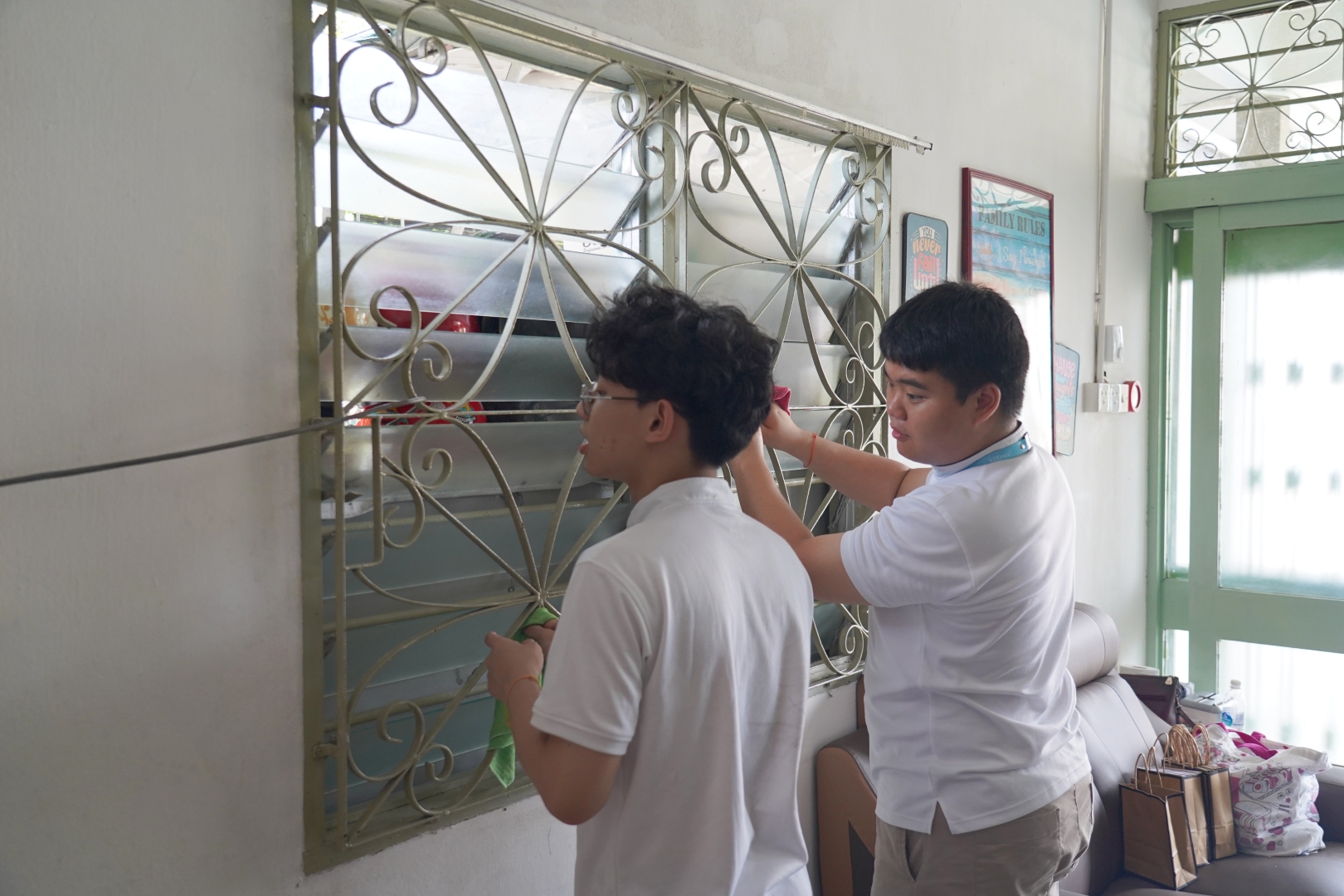
One key situation occurred during the cleaning and wrap-making session at Crystal Family Home. According to our original plan, only four team members were supposed to handle the cleaning on the first floor, while the remaining members would continue the wrap-making activity together with the children. However, during the implementation phase, the person-in-charge (PIC) from Crystal Family Home suddenly informed us that all the children had to follow and watch us during the cleaning. Additionally, we were told that we also needed to clean the second floor—a requirement that had not been clearly communicated to us earlier.
My Role and the Team's Response
At that time, my role was to carry out the cleaning task assigned by our team leader. I focused on finishing my part as quickly as possible and actively helped other teammates to speed up the overall process. Because the PIC's new instructions required significantly more cleaning work and the presence of the children during this activity, almost all of our team members had to stop their other tasks and participate in the cleaning together. As a result, the wrap-making session was delayed, and the schedule we had carefully planned for the day's activities could not proceed as originally arranged. This unexpected situation tested our team's ability to adapt and work together under pressure.
⚖️ 2. Conflict Analysis – Thomas-Kilmann Model
My Personal Conflict Style: Avoiding and Accommodating
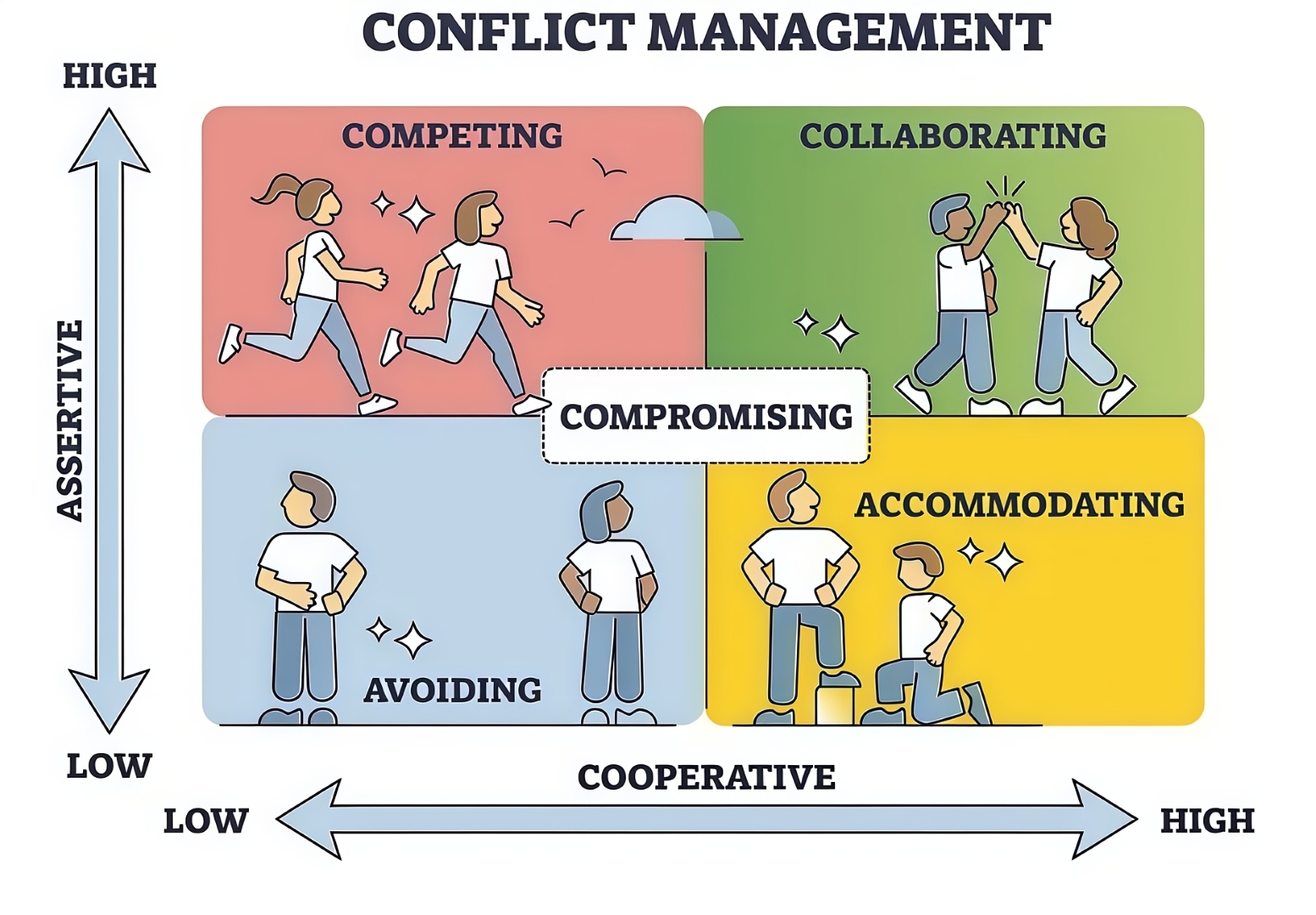
When I reflect on this incident using the Thomas-Kilmann Conflict Model, I notice that my personal default style in that moment was a mix of Avoiding and Accommodating. When the Crystal Family Home PIC suddenly changed the plan and asked us to clean both floors with all the children following us, I did not speak up or question the decision. Instead, I complained privately in my heart and with some friends, but outwardly I simply accepted the instructions and focused on cleaning as fast as possible. This demonstrates an Avoiding tendency because I did not directly express my concerns, and an Accommodating tendency because I prioritised the PIC's request and the relationship with the orphanage over my own opinion about the schedule.
The Team's Collective Response
From a team perspective, our group also leaned towards an Accommodating or light Compromising style. Our leader or representative did attempt to discuss the situation with the PIC, but in the end we still followed the orphanage's plan without pushing strongly for our original schedule. We accepted the extra cleaning work and allowed the wrap-making session to be delayed, even though it affected our timeline and the children's experience. In that moment, we placed more importance on respecting the external stakeholder and avoiding open conflict than on protecting our own carefully prepared plan.
A Better Approach: The Collaborating Style
Looking back, I can see that a more Collaborating approach might have created a better win–win outcome. For example, we could have calmly proposed a clear alternative: first, complete the cleaning for both floors with a specific end time agreed together with the PIC, and then proceed with the wrap-making session once the environment was ready. By explicitly negotiating the order and timing, we could still meet the orphanage's needs for cleanliness while also preserving enough time for the planned interactive activity with the children. This would have required more assertive but respectful communication—balancing our responsibility to follow the PIC's request with our responsibility to deliver the planned learning experience for the children.
💚 3. Relationship Analysis – EBA
Deposits Within Our Team: Unity Through Struggle
When I reflect on this situation using the Emotional Bank Account (EBA) concept, I can see that it created both deposits and withdrawals in our relationships. Inside our team, the sudden change of plan and the additional cleaning requirements made the work more tiring and our schedule less smooth—but it also brought us closer together. Even though we were all exhausted, I noticed that we tried to help one another, speed up the cleaning together, and support the group so that we could still complete the activities. This "we all suffer together and help each other" feeling was like a deposit into our Emotional Bank Account, because it strengthened our sense of unity and teamwork. My trust in the leader also increased, as I observed that they tried to discuss with the PIC and then continued to coordinate the cleaning so that we could adapt to the new instructions instead of giving up.
Mixed Impact on the External Relationship
In our relationship with the Crystal Family Home PIC, the impact on the Emotional Bank Account felt more mixed. On one hand, I respected the PIC's decision because I understood that asking us to clean both floors and involving the children could reduce their long-term burden and improve the environment for the orphanage. This understanding made me more willing to cooperate and can be seen as a deposit in the relationship. On the other hand, I also felt some frustration because the change of plan was not communicated earlier, which caused our wrap-making session to be delayed and made the flow of the programme less smooth. That part felt like a withdrawal from the Emotional Bank Account, because it created stress and forced us to rush.
Overall Outcome: A Positive Balance
However, in the end we still completed all the planned activities, and the children were happy with the experience we provided. So overall, the project continued to move forward and the relationship with the orphanage remained positive, even if the day was more tiring than expected. This experience taught me that sometimes short-term withdrawals can be balanced by the long-term deposits we make through perseverance, adaptability, and a willingness to support both our teammates and external partners. The key is to remain flexible while still maintaining open communication to minimise unnecessary stress in future collaborations.